
Review · LANZAROTE
Lanzarote: Whale and Dolphin Watching Eco-Friendly Catamaran
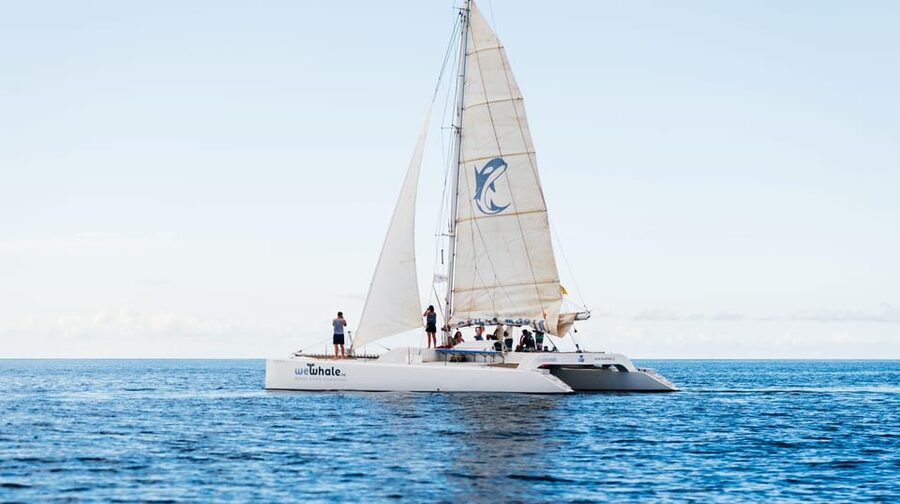
The most unusual part of this Lanzarote boat trip is the boat itself. This fully electric catamaran moves without engine fumes or the usual diesel rumble, so you can hear the sea and watch for wildlife in relative quiet. That matters when you are looking for animals that are easily disturbed.
I like the small-group feel reported on several outings, and I like the crew’s careful approach around dolphins. The hydrophone adds something special, too: you do not just watch marine life, you may hear its underwater calls. The main drawback is simple: wild animals keep their own schedule, and some trips see no whales or dolphins. Cool, cloudy weather can also make the four hours feel chilly.
Key points at a glance
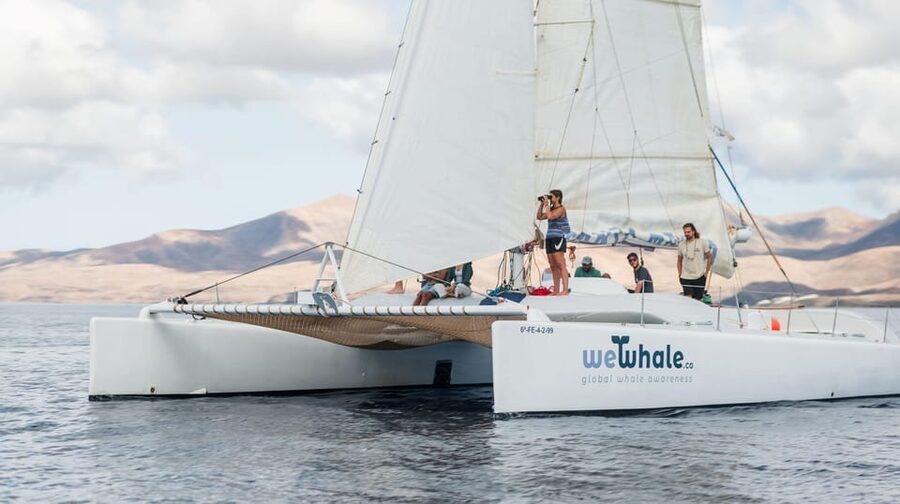
- Silent electric power: The Canary Islands’ first fully electric, emission-free catamaran avoids diesel fumes and engine noise.
- Wildlife in the open Atlantic: Dolphins, whales, and even a turtle have been spotted, but sightings are never guaranteed.
- Underwater listening: An onboard hydrophone lets you hear whale and dolphin sounds below the surface.
- Careful animal watching: The crew keeps a respectful distance and avoids chasing or crowding dolphins.
- Puerto Calero departure: The boat leaves from Dock F22, with parking and simple bus or taxi access.
- Four hours at sea: Local snacks, fresh fruit, and soft drinks are included, along with commentary in English, Spanish, or French.
Why the electric catamaran changes the trip
A whale-watching boat is only as good as the setting it creates for the animals and the people watching them. Here, the electric motor is not just a green label on the brochure. It changes the mood on board.
With no diesel exhaust drifting across the deck, you can enjoy the sea air without the familiar fuel smell. The quiet motor also helps when the boat slows near a pod. You hear more of the water, the wind, and the reactions of people around you. One outing produced the striking combination of several dolphin groups and what was described as fantastic silence while watching them.
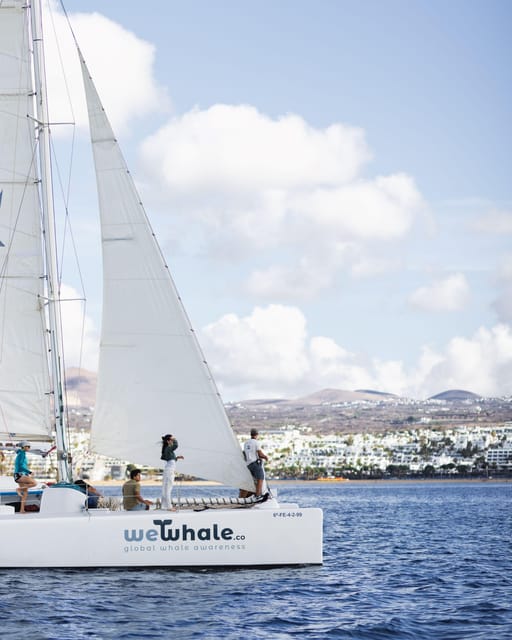
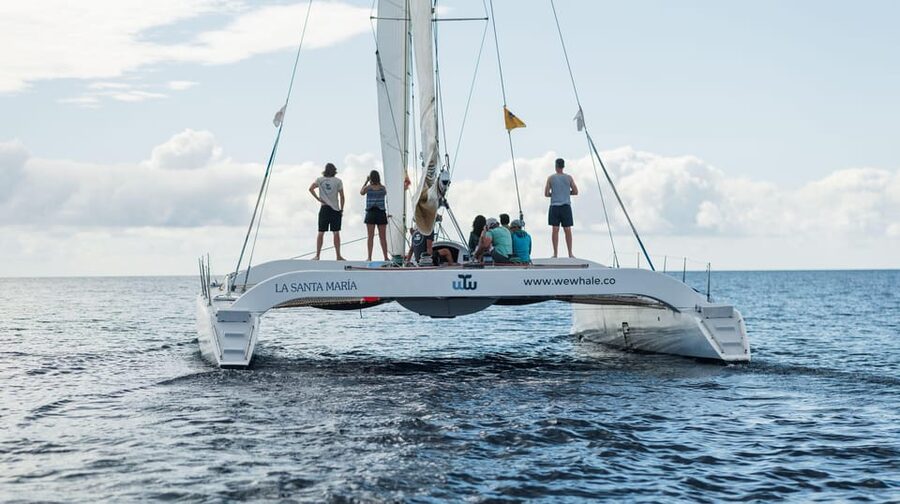
The catamaran design helps, too. You are close to the water rather than perched high above it on a large excursion vessel. That can make a dolphin surfacing nearby feel more immediate. The boat also gives you broad views in several directions, useful when wildlife can appear anywhere around the vessel.
The service does not include sailing on this outing, despite the peaceful feel of the boat. The catamaran runs under electric power. If you are expecting sails and a traditional sailing trip, adjust your expectations before booking.
More Catamaran Cruises in Spain
- Palma de Mallorca: 5-Hour Catamaran Cruise with Lunch & Swim
★ 4.5 · 9,957 reviews - Malaga: Catamaran Sailing Trip with Sunset Option
★ 4.4 · 8,613 reviews - Barcelona: Daytime or Sunset Catamaran Cruise with Music
★ 4.3 · 5,923 reviews
Leaving Puerto Calero for the Atlantic
Your meeting point is Marina Puerto Calero, Pontoon F22. This is a useful detail because marinas can have several piers and boat names, and arriving at the wrong end can cost you time. Allow enough time to find Dock F22 rather than simply aiming for the marina entrance.
Parking is available, and you can reach Puerto Calero by bus or taxi. The supplied information does not include a hotel pickup service, so plan your own route to the marina. Bring your hat and sunscreen even if the morning begins cool. Once you leave the shelter of the harbor, there may be little shade.
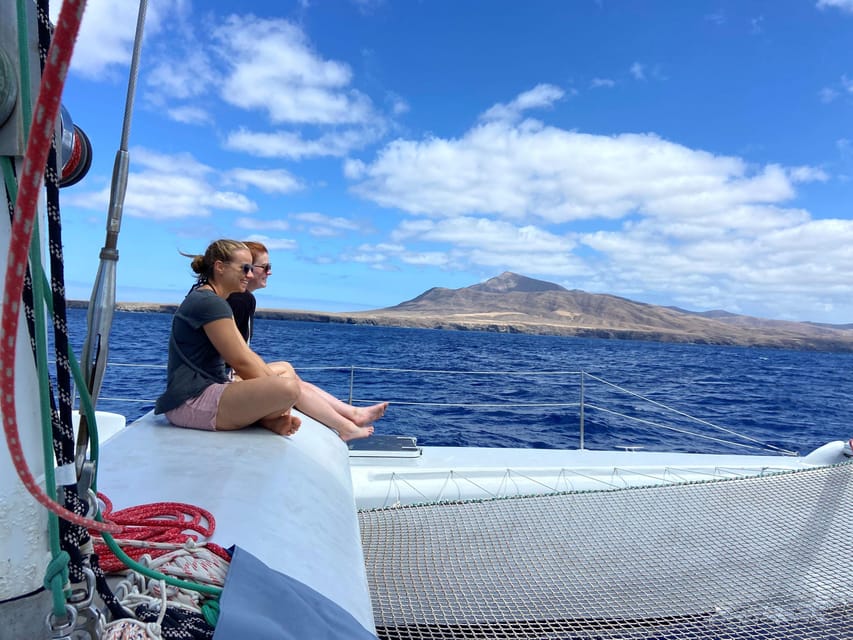
The first part of the trip gives you time to settle in, learn how the wildlife search works, and take in views of Lanzarote’s coast. The catamaran’s open-air position is a major part of the pleasure, but it also means you feel the weather directly. In February, one outing had cloudy skies and fairly cool conditions. A light extra layer is sensible, even though only a hat and sunscreen are officially listed as things to bring.
Searching for whales and dolphins without chasing them
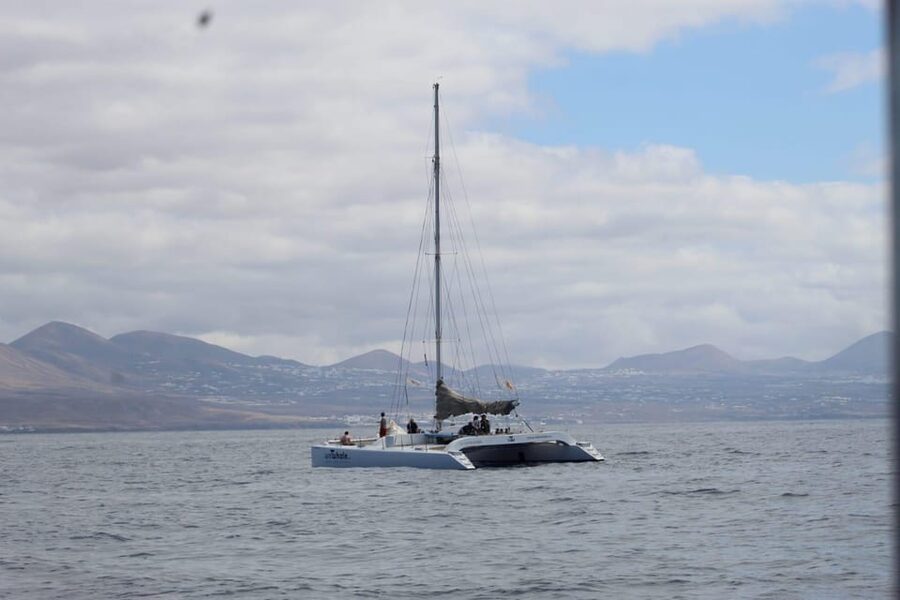
This is a wildlife trip, not a guaranteed animal show. The crew searches the Atlantic waters around Lanzarote, watching for movement, fins, blows, or groups traveling across the surface. You may see nothing for a stretch of time. That waiting is part of the bargain.
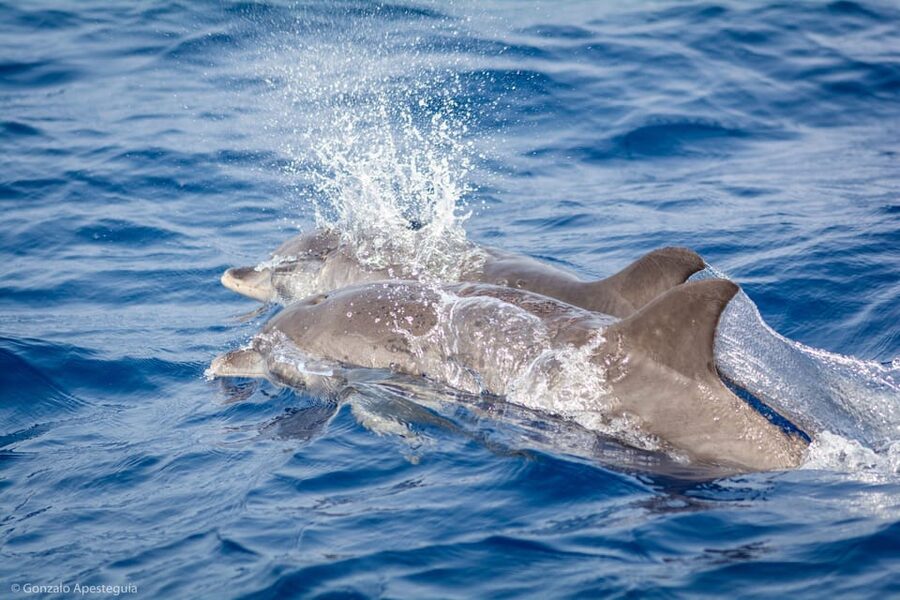
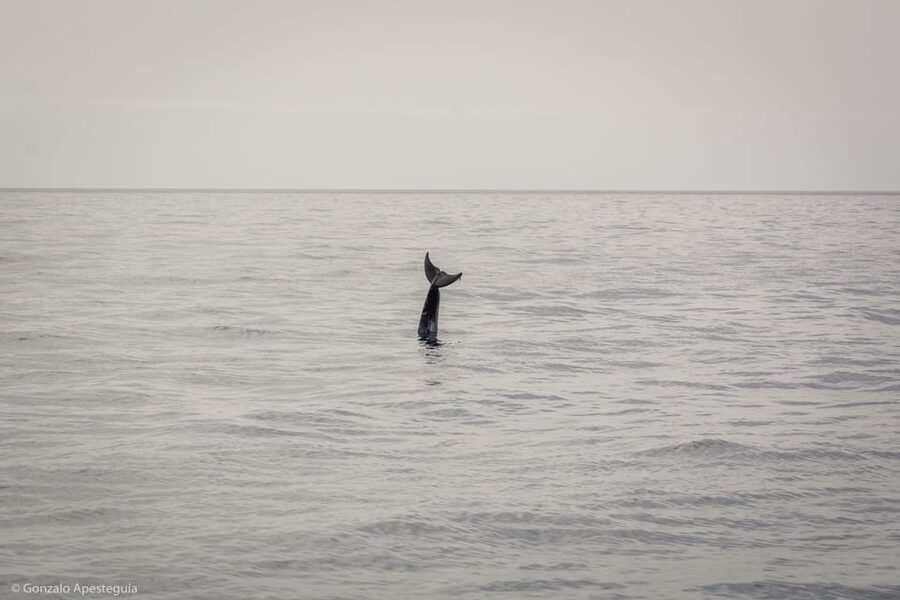
On successful outings, the reward can be excellent. Sightings have included several schools of dolphins, two different types of dolphins, whales, and a turtle. Seeing more than one kind of animal in four hours is possible, but you should not treat those sightings as a promised itinerary.
The most reassuring part of the operation is the crew’s stated care around the animals. When dolphins appear, the boat does not simply rush in and box them in from several directions. The crew makes an effort not to pressure them. That gives you a better chance of seeing natural behavior rather than a frantic response to a boat.
You should also keep your expectations realistic about distance. The description promises close observation, but wild dolphins and whales decide how near they come. A quiet boat improves your odds of a calm encounter, not a guaranteed touch-at-the-rail moment. Feeding animals is not allowed, and that is exactly the rule you want on a responsible wildlife trip.
The hydrophone adds a second kind of wildlife encounter
Most people picture whale watching as a visual activity. You stand at the rail, scan the water, and hope for a fin or a breach. The onboard hydrophone gives this tour another layer.
When conditions allow, you can listen to sounds made underwater by whales and dolphins. That changes the experience from simply spotting an animal to thinking about how it communicates below the surface. The sound may be brief or subtle, but it helps explain why the crew treats quiet operation and sensible distances as important.
The hydrophone is also useful if the animals remain hard to see. You still need luck for a clear sighting, but listening keeps the search from becoming a long period of staring at empty water. The crew’s commentary adds context about the marine environment around Lanzarote and the animals you may encounter.
The languages offered are English, Spanish, and French. If you have a strong interest in marine life, pay attention to the explanations rather than treating them as background noise. The educational side is one reason this trip offers more than a standard boat ride.
Same coast, a different boat:
- Tenerife: Eco-Yacht Whale and Dolphin Watching and Swimming
★ 4.7 · 15,619 reviews - Gran Canaria: Catamaran Dolphin Watch Cruise with Snorkeling
★ 4.4 · 4,761 reviews - Valencia: Sailing Catamaran Cruise with Sunset Option and DJ
★ 4.1 · 4,270 reviews - Lloret de Mar: Catamaran Sailing Cruise with BBQ and Drinks
★ 4.5 · 3,812 reviews
What the four-hour outing feels like
The exact order of events depends on wildlife and sea conditions, but you can expect a four-hour trip built around a few repeating rhythms:
- You meet at Dock F22 and board the electric catamaran.
- The crew takes the boat out from Puerto Calero and begins the search.
- You scan the sea while listening to commentary about Lanzarote’s marine environment.
- The crew may use the hydrophone to pick up underwater sounds.
- The boat pauses or slows when wildlife is located, allowing time to watch without feeding or crowding the animals.
- Snacks, fresh fruit, and soft drinks are served during the trip.
- You return to Puerto Calero after roughly four hours.
That sounds straightforward, and it is. The pleasure comes from the changing conditions. One moment you are looking over an empty stretch of Atlantic, and the next a pod may surface nearby. If you need constant activity, this may feel slow. If you enjoy the anticipation of wildlife watching, the pauses are part of the experience.
The boat also keeps the trip from feeling like a race between sightings. You have time to look at Lanzarote’s coastline, take in the open water, and enjoy the quiet. The trip is as much about being at sea in a low-impact boat as it is about checking off a dolphin sighting.
Snacks, drinks, and comfort on board
Included refreshments are simple: snacks, fresh fruit, and soft drinks. You should think of these as useful provisions rather than a full meal. Four hours on the water can make even a modest snack welcome, especially if you have not eaten recently.
Local flavors are included among the refreshments, which gives the food a small connection to the island. Alcohol is not allowed, and neither are drugs, smoking, littering, or feeding animals. These restrictions protect the air, the boat, and the wildlife.
Comfort depends heavily on the day. The electric motor removes fumes and much of the mechanical noise, but it cannot control wind, cloud, or temperature. The February outing that had no sightings was also described as cloudy and fairly fresh. If you book outside the warmest, sunniest period, carry a light layer even though sunscreen remains important.
The catamaran puts you close to the water. That is a strong point for viewing, but it may not suit anyone who wants a sheltered, fully enclosed cabin. The supplied information does not describe an indoor viewing area, so prepare for an outdoor maritime experience.
How much value do you get for $112?
At $112 per person, this is not a cheap way to spend a morning. You are paying for four hours on the water, an electric catamaran, a crew-led wildlife search, interpretation, the hydrophone, and refreshments. The cost makes the most sense if the low-emission boat and responsible wildlife practices matter to you.
A cheaper boat trip may offer a similar chance of seeing dolphins, but it may not offer the same quiet ride or electric operation. The absence of diesel smell is not a minor detail when you spend several hours outside. It can make the ride more pleasant for anyone sensitive to fumes.
The price also buys a more focused experience than a basic harbor cruise. You are not simply looking at the coast from the water. The crew is watching for marine life, explaining the ecosystem, and adjusting the outing around what appears in the sea.
Still, the price does not buy guaranteed whales or dolphins. You could spend four hours watching open water and return without a sighting. That is not a failure of the crew. It is the normal risk of wildlife watching, and you should be comfortable with that before paying.
The best value comes when you judge the trip by the whole outing: the boat, quiet, education, ocean time, and chance of wildlife. If your only goal is a guaranteed close-up dolphin encounter, the price may feel high.
Who will enjoy this trip most
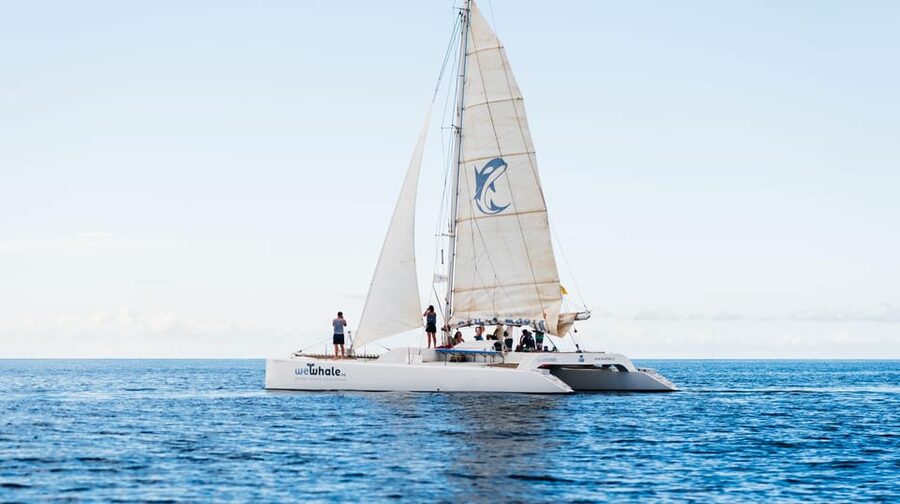
I would recommend this outing to anyone who cares about how marine wildlife is approached. The crew’s effort to avoid disturbing dolphins is important, and the electric motor gives the environmental idea practical weight.
It also suits people who prefer a quieter, more personal boat trip. One account described the smaller group as more personal than larger boats used for similar excursions. Group size can vary, so do not assume every departure will feel private, but the experience is not presented as a big party cruise.
Families may enjoy the wildlife and the hydrophone, provided everyone can manage four hours at sea and accepts the possibility of no sightings. Children who need constant action may find the search periods slow. Adults interested in nature, photography, or quiet coastal views will likely get more from the pace.
It is also a good fit for visitors staying near Puerto Calero or anyone who can reach the marina without a complicated transfer. The easy bus, taxi, and parking access keeps the logistics simple.
This tour is not suitable for wheelchair users. The supplied information does not provide further mobility details, so anyone with access needs should confirm suitability before booking.
Timing, weather, and the real wildlife gamble
You can check available departure times when booking, but the trip itself lasts four hours. That is long enough for a proper search rather than a quick ride offshore. It also means weather matters more than it would on a one-hour harbor trip.
A sunny day will make the coastline and open water more enjoyable, while cloud and cool air can reduce comfort. The trip can still operate under those conditions, and poor weather does not mean the crew has done anything wrong. It simply affects how pleasant the ride feels and how easy it is to watch the sea.
The timing can also shape the mood. One morning departure was changed to a sunset outing because it had very few people booked. The change did not prevent good sightings, including two kinds of dolphins, but it shows that departure arrangements can sometimes shift. If you have a tight schedule, allow flexibility.
No time of year removes the wildlife uncertainty. Dolphins and whales are wild animals, not scheduled performers. Book this as a chance to meet the Atlantic on good terms, not as a guaranteed checklist.
Practical advice before you go
Bring sunscreen and a hat. The reflection from the sea can be strong even when the air feels cool. A light jacket is sensible in cooler months, based on the February conditions described on one trip.
Arrive at Puerto Calero with Dock F22 in mind. Parking is available, and bus or taxi access is straightforward. The boat is located at Marina Puerto Calero, Pontoon F22, so do not rely on finding it by the general marina name alone.
Do not bring alcohol or drugs, and do not smoke, litter, or feed the animals. These rules are clear and fit the conservation purpose of the outing.
The booking terms are friendly to changing plans. You can cancel up to 24 hours before departure for a full refund, and you can reserve now and pay later. Check the available start times before committing, especially if you are trying to fit the boat trip around other Lanzarote plans.
Should you book the WeWhale Lanzarote catamaran?
Book it if you want a calm, wildlife-focused outing where the boat’s electric operation is central to the experience. The strongest reasons are the lack of diesel fumes, the quiet approach, the hydrophone, and the crew’s care not to crowd dolphins.
Think twice if you need guaranteed sightings, dislike sitting outdoors in changing weather, or want a short and inexpensive boat ride. Four hours is a serious commitment, and $112 is fair only if you value the full experience rather than a guaranteed animal count.
For the right person, this is a thoughtful way to spend part of a Lanzarote day. You may see dolphins, whales, or a turtle. You may also spend much of the trip scanning an empty sea. The electric catamaran, expert commentary, and respectful operating style make that uncertainty easier to accept, and the wildlife remains on its own terms.
FAQ
Where does the whale and dolphin trip leave from?
The catamaran leaves from Marina Puerto Calero, Pontoon F22, also identified as Dock F22.
How long does the experience last?
The boat trip lasts four hours.
What animals might I see?
Possible sightings include whales, dolphins, and turtles. Wildlife sightings are not guaranteed.
Is the catamaran fully electric?
Yes. It is described as the Canary Islands’ first fully electric, emission-free catamaran.
What food and drinks are included?
The trip includes snacks, fresh fruit, and soft drinks.
What languages does the crew speak?
The live guide service is available in English, Spanish, and French.
More Whale and Dolphin Watching Sails in Spain
- Costa Adeje: Whale Watching Catamaran Tour with Drinks
★ 4.7 · 3,653 reviews - Whale and Dolphin Watching Catamaran with Transfer and Buffet
★ 5.0 · 2,712 reviews - Los Cristianos: Eco Yacht Whale Watching Tour at Sunset
★ 4.6 · 2,130 reviews - Tenerife: Los Gigantes Whale Watching Cruise by Sail Boat
★ 4.9 · 2,040 reviews
Just added around Spain
- Cádiz Trimillennial Catamaran Navigation★ 4.0 · 21 reviews
- Sunset in Dénia from the Catamaran Mundo Marino★ 4.5 · 107 reviews
- Sailing trip and swim in the bay of Dénia on a catamaran★ 4.0 · 61 reviews
- Whale & Dolphin Observation on Electric Sailing Boat in Denia★ 4.5 · 10 reviews
- Sunset in Catamaran from Calpe or Altea★ 4.0 · 45 reviews
- Small Group Dolphin Sunset Tour on Electric Sailing Boat Denia★ 4.5 · 12 reviews
- Catamaran ride with aperitif and white wine from Denia★ 5.0 · 9 reviews
- Bay trip in Calpe or Altea with a sailing catamaran★ 3.5 · 30 reviews
Catamaran Cruises, compared.

Daytime or Sunset Catamaran Cruise with Music
Read our review →
Catamaran Tour with BBQ Dinner, Drinks, and Music
Read our review →

Blue Lagoon, Beaches & Bays Trip by Catamaran
Read our review →
Catamaran Dolphin Watch Cruise with Snorkeling
Read our review →Browse the lists this tour appears in