
Review · ASWAN
4-Days Aswan sails Nile Cruise Luxor &Abu Simbel.Hot air Balloon
The big appeal here is that you see Upper Egypt by sleeper train and Nile cruise, not by rushing between airports. In four days, you reach Abu Simbel, Philae, Kom Ombo, Edfu, the Valley of the Kings, Karnak, and Luxor Temple while your ship carries you between many of the sights.
I like the three nights of full-board cruising and the practical door-to-door transfers in Aswan and Luxor. I also like the small guided sightseeing group, advertised at up to 15 people, which gives guides such as Khaled, Michael, and Mike room to answer questions. The main catch is that entrance fees are not included, and the sleeper train can be cramped, noisy, and less restful than its name suggests.
Key points to know before booking
- Abu Simbel is the early highlight: Allow about eight hours for this long but rewarding excursion from Aswan.
- Your ship is your moving hotel: Three nights of accommodation, breakfast, lunch, and dinner are included.
- The cruise covers the classic route: You visit Philae, Kom Ombo, Edfu, Luxor, and the West Bank.
- Guiding is a major part of the value: English-speaking Egyptology guides lead the sightseeing, with names such as Khaled, Michael, and Mike associated with the operation.
- Budget for extras: Monument admission, cruise Wi-Fi, drinks, and boat staff tips are separate.
- The return train is not for everyone: The advertised plan returns you from Luxor to Cairo by sleeper, but one customer chose a flight instead because of the train conditions.
What this four-day Nile trip is really offering
At $257 per person, this is a busy, budget-minded way to connect Cairo with the great monuments of southern Egypt. You are paying for the broad framework: transfers, guided sightseeing, three nights aboard a 5-star Nile ship, meals on board, and the long-distance sleeper train arrangement.
That price looks strong for the amount of ground covered. A private Nile cruise, separate transport, guides, and individual monument visits can cost much more. Here, you trade some flexibility for a ready-made route and shared arrangements.
The trip has two different moods. The sleeper train is functional transport, with an adventurous edge. The cruise is the calmer center of the experience. You wake up near another ancient site, eat on board, and watch the Nile pass by instead of packing and unpacking each day.
The schedule is full. You will not have much unstructured time, especially on the Abu Simbel and Luxor days. That suits you if your priority is seeing the major sites efficiently. If you prefer slow mornings, long café stops, or time to explore towns on your own, this plan may feel tight.
A few more sailing trips around Egypt worth a look
- 4-Day Nile Cruise sails Aswan to Luxor&Abu Simbel.Hot air Balloon
★ 4.5 · 247 reviews - 4-Days Nile Cruise sails Aswan to Luxor &Abu Simbel. Balloon tour
★ 5.0 · 49 reviews - 4-Days Nile Cruise sails Aswan to Luxor &Abu Simbel. Air Balloon
★ 5.0 · 26 reviews
From Cairo to Aswan by sleeper train
The journey begins with a sleeper train from Cairo to Aswan, with meals included. The operator uses Watania, described as the only sleeper train company in Egypt, so there is not a choice between several competing services.
You should set your expectations carefully. A sleeper compartment is not the same as a quiet hotel room. The train has been described as cramped, loud, and noisy, and one person found it uncomfortable enough to replace the return train with a flight from Luxor to Cairo.
Still, the train adds a real sense of movement to the trip. You leave Cairo behind and wake much farther south, ready to begin the Nile portion. For many people, that is worth tolerating a less polished night than they might have at a hotel.
The tour provides transfers from a Cairo or Giza address, or from the airport. In Aswan, you are collected from your hotel or the train station and taken to the ship. East Bank hotel pickup is included; West Bank pickup costs an extra $10 per person.
Aswan High Dam and the rescued Temple of Philae
After reaching Aswan, you board the cruise ship to refresh and rest before sightseeing. The first major stop is the Aswan High Dam, the huge 1960s project that changed the flow of the Nile and created Lake Nasser.
From the top, you can look across the lake toward Kalabsha Temple and toward the power station. This is a short visit, about an hour, but it helps explain why so many ancient places in the area had to be moved or protected.
Philae gives you the more memorable experience. A motorboat carries you across to the island, where the temple was rebuilt about 500 meters from its original location after the High Dam raised the water level. The setting is part of the attraction, with the temple surrounded by the Nile rather than buried in a modern city.
The temple is dedicated to Isis, one of ancient Egypt’s most important goddesses. Your guide leads a walking visit, then you have time to look around independently. I would use that free time to study the carvings and enjoy the island setting, since this is one of the few stops where the location feels as important as the building.
Admission is extra at both the High Dam and Philae. The tour includes the vehicle, guide, and boat arrangement, but you should keep money aside for the ticket costs.
Abu Simbel requires an early start
The Abu Simbel excursion is the longest outing, taking about eight hours. You leave early, visit the temples, and return to the ship in the afternoon, with time to prepare for sailing.
Abu Simbel is worth the effort. The two rock-cut temples were built by Ramesses II, with the larger facade guarded by enormous seated figures. The scale is striking, but the site also carries a modern story: the temples were moved to save them from the rising waters of Lake Nasser after construction of the High Dam.
The long drive is the tradeoff. This is not a quick side trip, and the day will feel demanding after the sleeper train and Aswan sightseeing. Still, skipping Abu Simbel would leave out one of the most dramatic places on the southern Nile route.
A shared small-group excursion with an English-speaking guide is included. Admission is separate. If Abu Simbel is a top priority for you, this arrangement offers a practical way to reach it without organizing a separate vehicle and guide.
Same coast, a different boat:
- Hurghada: 3 Islands, Dolphins & Snorkel Yacht Trip w/ Lunch
★ 4.7 · 4,609 reviews - Ras Mohamed & White Island luxury Yacht Trip Sharm el Sheikh
★ 4.5 · 997 reviews - Snorkeling trip to Ras Mohamed & The White Island aboard Luxury Yacht
★ 5.0 · 479 reviews - Nile River Dinner Cruise on a Yacht with Open Buffet
★ 4.5 · 292 reviews
Kom Ombo combines two temples in one stop
Later, the ship stops at Kom Ombo. The temple is unusual because it is dedicated to two gods, Sobek, the crocodile god, and Horus the Elder. Its double design gives the visit a different feel from the single-deity temples elsewhere on the route.
The planned visit lasts about three hours, including the guided exploration. The ship then continues toward Edfu. Timing can depend on the sailing schedule, so you should be ready to leave the ship when your guide gives the meeting time.
Kom Ombo is a good example of why a guide helps. The site can look like a collection of columns and walls if you do not know what you are seeing. With an explanation of the paired gods and the temple’s purpose, the layout becomes easier to understand.
The admission fee is not part of the $257 price. The cruise, guide, and transport arrangements are included, but not the monument tickets.
Edfu and the Temple of Horus
While the ship sails, you have some free time on board before arriving at Edfu. The stop is focused on the Temple of Horus, one of the best-preserved major temples in Egypt.
Horus was shown as a falcon-headed god, and the temple’s walls carry detailed scenes and inscriptions. The visit lasts about three hours, including the guided tour. Compared with the open, weathered remains at some other sites, Edfu gives you a clearer sense of how a functioning temple complex once looked.
This is also one of the moments when the cruise format works well. You spend the sailing period resting or watching the river, then visit the temple before continuing south toward Luxor. The ship arrives in Luxor in the afternoon on the third day.
Luxor’s West Bank packs several major sights into one morning
The fourth day begins with breakfast and checkout. You cross to Luxor’s West Bank for the Valley of the Kings, the burial ground containing 66 tombs from different dynasties.
The visit is planned for about two hours. Admission to the valley is extra, and the standard ticket does not necessarily cover every tomb or special entry, so ask your guide what your ticket allows before choosing which tombs to enter.
The optional hot-air balloon ride takes place early in the morning. The supplied details do not state its price, flight length, or exact booking arrangement, so confirm those points before paying. If you choose it, expect an earlier start before the Valley of the Kings visit.
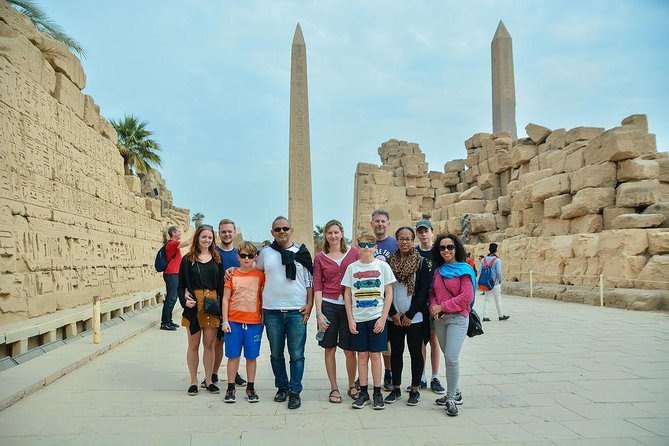
Next comes the Temple of Hatshepsut at Deir el Bahari, with about 90 minutes for the visit. Hatshepsut was Egypt’s only female ruler, and the terraces of her temple are built into the cliffs. The site gives you a useful change of pace after the underground tombs.
The final West Bank stop is the Colossi of Memnon, two huge seated statues representing Amenhotep III and facing the Nile. The stop lasts about 45 minutes and admission is free. It is brief, but it gives you a chance to pause before crossing back toward the East Bank.
Karnak and Luxor Temple finish the route
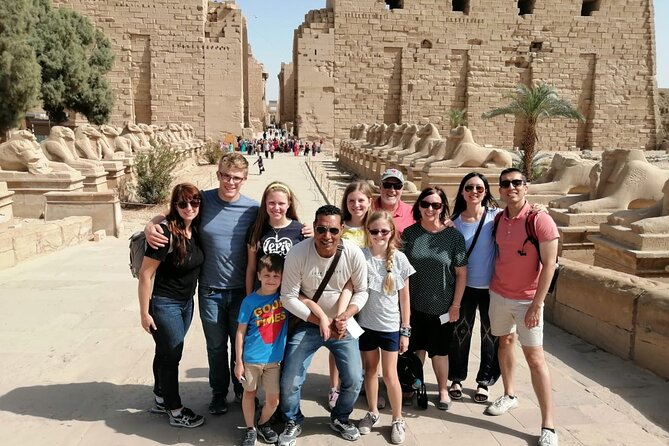
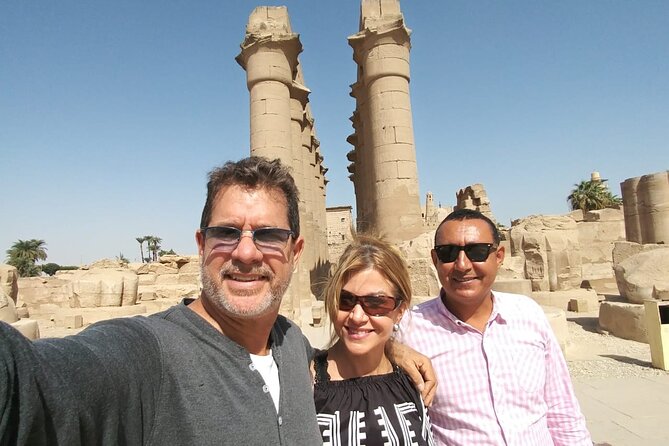
Karnak needs time. The complex was dedicated first to Amun-Ra, his wife Mut, and their son Khons, then expanded by roughly 30 additional kings. It covers a huge area and includes more than 20 temples.
Your visit lasts about two hours. The Hypostyle Hall is the main visual knockout, with its forest of giant columns. The Temple of Amun and the papyrus-shaped columns help you understand the scale of ancient Egyptian religious architecture better than a short photograph stop ever could.
Karnak can be tiring because of its size. Wear comfortable shoes and listen for the guide’s meeting point. It is easy to wander too far in a complex this large, especially when several groups are moving through the same spaces.
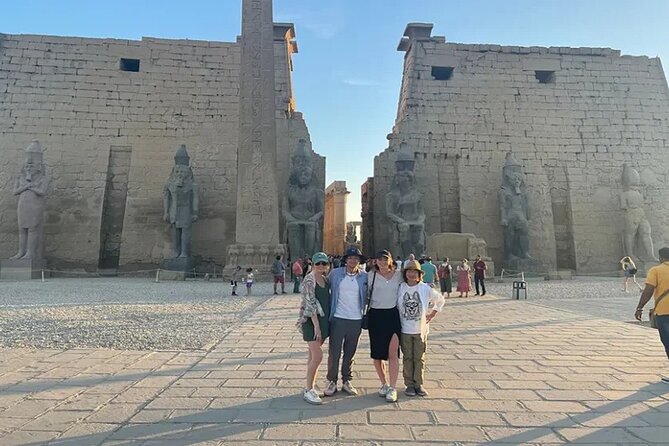
Luxor Temple comes at the end of the day, with about 90 minutes to explore. Its location in the modern city gives it a different character from the more isolated West Bank sites. The visit also creates a fitting final chapter, since the temple’s columns, courts, and statues bring the main sightseeing route back to the Nile-side heart of Luxor.
The tour ends in Luxor around 3 to 4 p.m. Transfers to East Bank hotels are included. A West Bank hotel transfer costs an extra $10 per person.
The cruise ship, meals, and what 5-star means here
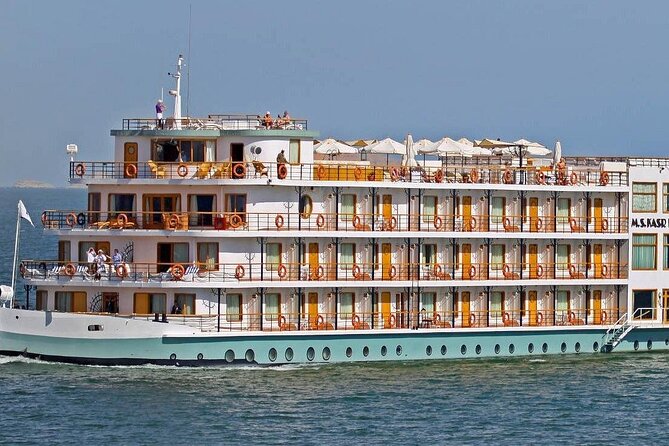
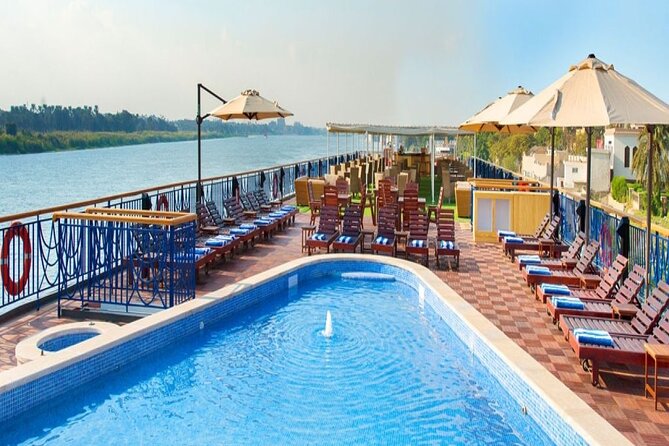
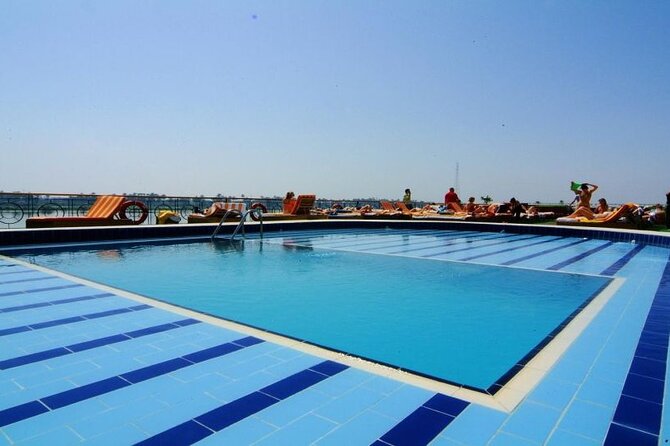
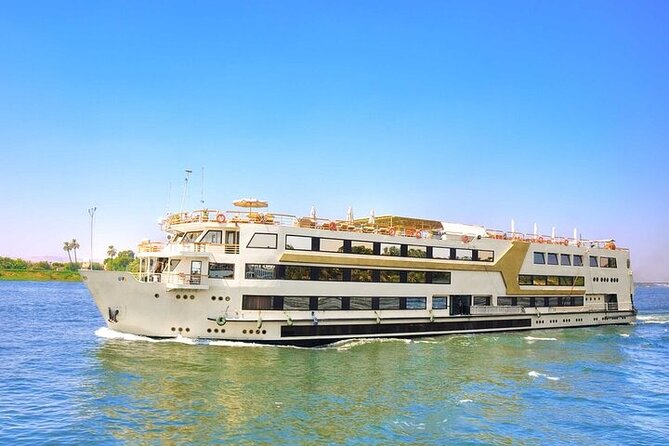
You spend three nights aboard a 5-star Nile cruise ship on a full-board basis. Breakfast, lunch, and dinner are included, and the ship functions as both accommodation and transport between Aswan and Luxor.
The ship has received strong praise for its rooms, meals, and general comfort. One named ship, Radamis 1, was described as nicely appointed and well provisioned, but the final ship name may not be confirmed until close to departure because sailing permission and availability can change.
That point matters. This is not a fixed hotel where you select a room from a permanent floor plan. The operator says the boat is confirmed about two days before the trip, based on the best available option and government sailing permission. If you care about the exact ship, ask for the current policy before booking.
Drinks and bottled water are not included. Wi-Fi is available for an extra charge on the ship, and boat staff tips are separate. Add those costs to your budget rather than treating the $257 price as all-inclusive.
Guides and group size
The experience is built around an English-speaking Egyptology guide. Guides named in the feedback include Khaled, Michael, and Mike. Khaled is praised for managing the group’s interests, while Michael and Mike are described as friendly and strong at explaining the monuments.
The tour description promises a group capped at 15 for the main guided experience, which is a useful size for asking questions and staying close to your guide. The general activity information also gives a maximum of 50 participants, so confirm which parts of the trip use the smaller group and which transfers or cruise arrangements may be larger.
English ability can vary by guide. One customer found the explanation difficult when the guide switched between English and Arabic. That does not mean every departure will have the same issue, but if clear English commentary is important to you, request confirmation before departure.
The real cost beyond $257
The advertised price is attractive, but entrance tickets are the largest extra. The operator’s response to one customer put adult entrance fees at about $55 in total, with lower prices for students. Treat that figure as a useful guide rather than a guaranteed final amount, since ticket prices can change.
You should also allow for:
- Entrance tickets at the High Dam, Philae, Abu Simbel, Kom Ombo, Edfu, the Valley of the Kings, Hatshepsut’s temple, Karnak, and Luxor Temple
- Cruise Wi-Fi
- Water and other drinks
- Boat staff tips
- The optional hot-air balloon
- A $10 per person supplement for West Bank hotel pickup or drop-off in Aswan or Luxor
Even after adding these costs, the package can represent good value if you want the classic sights, a guide, meals, and transport arranged in one purchase. It is less attractive if you already have hotels and transport booked, or if you want to choose your own cruise ship and sightseeing pace.
Who should book this Nile cruise
I would recommend it to you if this is your first visit to Upper Egypt and you want to see the main sites without handling every train, transfer, boat, and guide booking yourself.
It suits active sightseers who can manage early starts, long touring days, and a packed schedule. It is also a good fit for parents or older family members who prefer an organized route, though the sleeper train conditions deserve a careful discussion before booking.
You may want another plan if you need quiet transport, dislike shared arrangements, or want to spend several days in Luxor alone. The cruise is comfortable, but the train and the Abu Simbel excursion reduce the amount of rest in the schedule.
The overall customer rating is 4.7 out of 5, with 95 percent recommending the experience. The strongest praise centers on the guides, meals, ship comfort, and the amount of Egypt covered for the price. The clearest cautions are the train, language clarity on one departure, extra admission fees, and uncertainty about the exact cruise ship.
Should you book it?
Book this tour if you want maximum ancient Egypt in minimum time and you are comfortable with a shared schedule. Abu Simbel, the Nile sailing, Edfu, Karnak, and the Valley of the Kings make the route unusually strong for four days.
Before you commit, confirm the sleeper train arrangements, the likely group size, the cruise name, the admission budget, and the price of the hot-air balloon. If those details fit your expectations, $257 is a solid starting price for a guided Cairo to Aswan to Luxor journey with three nights on the Nile.
FAQ
Is the sleeper train included in the tour?
The experience is arranged around sleeper train travel from Cairo to Aswan and from Luxor back to Cairo, with meals. The train is operated by Watania, described as the only sleeper train company in Egypt.
How many nights do I spend on the Nile cruise?
You spend three nights aboard a 5-star Nile cruise ship on a full-board basis.
Are entrance fees included?
No. Entrance fees for the listed sightseeing stops are separate. The operator has indicated an approximate total of $55 for an adult, with lower prices for students.
Is Abu Simbel included?
Yes. The itinerary includes a shared small-group trip to Abu Simbel with an English-speaking guide. The excursion takes about eight hours, and admission is extra.
Is the hot-air balloon ride included?
No. The hot-air balloon ride in Luxor is optional. The provided tour details do not give its price.
Where does the tour end?
The sightseeing ends in Luxor around 3 to 4 p.m. Transfers to Luxor East Bank hotels are included. A West Bank hotel transfer costs an extra $10 per person.
Can I cancel for a full refund?
You can cancel at least 24 hours before the experience starts for a full refund. Cancellations and changes made less than 24 hours before the local start time are not accepted for a refund.
Just added around Egypt
- 1 -Hour Sailing Egyptian felucca ride on the Nile in Cairo★ 4.5 · 41 reviews
- Dinner Nile Cruise belly dancer open buffer tanora show sailing on Nile★ 5.0 · 9 reviews
- Ain Sokhna Red Sea Day Use Yacht from Cairo★ 5.0 · 12 reviews
- Private sailing boat with its Sailor for one hour or more★ 5.0 · 25 reviews
- Cairo sailing boat Tours on the Nile by felucca★ 4.0 · 26 reviews
- All inclusive private sailing Egyptian Nile Felucca Ride at Cairo★ 5.0 · 21 reviews
- Sailing Nile cruise from Aswan to Luxor includes tours for 3 nights★ 5.0 · 16 reviews
- Private 1-Hour Felucca Sailing and Botanical Garden In Aswan★ 3.5 · 15 reviews
Sailing Trips, compared.

Oslo Fjord Sightseeing Cruise by Sailing Ship
Read our review →
Sailing Catamaran Cruise with Sunset Option and DJ
Read our review →

Key West Sunset Sail with Open Bar, Live Music and Hors D’oeuvres
Read our review →
Los Cabos Luxury Sailing, Snorkel and Lunch Cruise
Read our review →

Daytime/Sunset/Night City Sailboat Tour with Drink
Read our review →Browse the lists this tour appears in