
Review · ASWAN
Nile cruise between Aswan and Luxor: Sail the best temples in Egypt
The best part of this Aswan to Luxor Nile cruise is the rhythm: ancient temples in the morning, quiet river views between stops, and meals and a pool back on the boat. You get a connected tour of southern Egypt instead of piecing together separate day trips.
I like the easy airport, station, or hotel pickup in Aswan, and I like the way guide Mohamed Gaber, often called Moha, brings the gods and pharaohs to life with clear explanations, humor, and even little role-playing activities. The main consideration is the pace. Several major sites arrive close together, and the optional Abu Simbel excursion adds an early start and another ticket cost.
Key points to know before booking
- Abu Simbel is optional but highly worthwhile, with its enormous rock-cut temples dedicated to Ramses II and Nefertari.
- The route covers Egypt’s essential southern temples, including Philae, Kom Ombo, Edfu, Karnak, and Luxor Temple.
- Mohamed Gaber is a major part of the experience, especially if you want lively explanations and Spanish-language guiding.
- The $500 price includes four nights aboard the cruise, listed visits, entrance tickets, four lunches, four dinners, and transfers at both ends.
- The group can reach 30 people, so expect a shared tour rather than a private journey.
- Drinks, tips, and the Abu Simbel admission ticket cost extra, so budget beyond the advertised price.
Why this Nile route works so well
A Nile cruise gives you a useful middle ground between a guided land tour and a resort stay. You move from Aswan toward Luxor while the river does much of the work. During navigation, you can rest by the pool, watch the riverbank pass, or simply recover from the heat and early starts.
This route also has a strong historical arc. You begin with the island sanctuary of Philae, see the unusual double temple at Kom Ombo, visit Horus at Edfu, then finish among the great temples and royal tombs around Luxor. The sites are not interchangeable. Each adds a different piece to the story of ancient Egypt.
I especially like that the cruise leaves room for interpretation rather than treating the monuments as photo stops. The tour is built around an Egyptologist guide, and the praise for Moha repeatedly focuses on his ability to explain complicated gods, rituals, and royal families in an entertaining way. He is also described as attentive when small problems arise, which matters on a tightly scheduled trip.
The tradeoff is that you have limited independent time. The first day is free in Aswan, and you get some free time in Luxor after checkout, but most of the important sites follow a set schedule. If you prefer to linger alone at one temple, this may feel brisk.
A few more sailing trips around Egypt worth a look
- 4-Day Nile Cruise sails Aswan to Luxor&Abu Simbel.Hot air Balloon
★ 4.5 · 247 reviews - Mahmya Island: Red Sea Sailing Experience
★ 4.7 · 169 reviews - Felucca Sailing trip on the Nile in Cairo
★ 4.5 · 142 reviews
Day 1: Arrive in Aswan and settle aboard
Pickup begins in Aswan, with collection available at the airport, train station, or a hotel you specify. The advertised start time is 6:00 am, although your exact pickup arrangement should be confirmed when booking. You are then taken to the boat, shown to your room, and able to begin using the cruise facilities and meal service.
The first day is intentionally light. You can rest by the pool or explore Aswan independently. That free time is valuable because the following days are full of guided visits and early movement.
Aswan itself has a calmer feel than Luxor, and the river setting gives you a gentle introduction to Egypt. The tour does not include a listed guided Aswan city visit, so you should not expect a formal sightseeing program on this day. If you want to see more of the city, use the free hours for your own plans.
The package includes accommodation for four nights, though the itinerary is described as approximately four days. That difference is worth clarifying before you pay, especially if you are coordinating flights or trains. You also receive lunch and dinner each day, while drinks are extra.
Day 2: Abu Simbel, Philae, and Kom Ombo
The optional Abu Simbel trip is the biggest decision on Day 2. The temples were cut into the rock during the reign of Ramses II and built for Ramses and his wife, Nefertari. The visit lasts about two hours, but the admission ticket is not included.
I would treat Abu Simbel as a serious priority if you can manage the added cost and early start. It is not just another temple stop. The scale and setting give it a different impact from the riverside monuments farther north. Since it is optional, you can also choose a quieter morning aboard the boat, but skipping it means missing one of southern Egypt’s most famous sites.
Later, you visit the Temple of Philae. Reached by boat because it sits on an island, Philae is dedicated to Isis, one of ancient Egypt’s most important goddesses. The short boat approach adds something special: the temple appears as a separate sacred place rather than simply another monument beside a road.
The scheduled visit lasts about one hour and admission is included. This is a good stop for anyone who wants more than royal monuments. Philae brings Egyptian religion, goddess worship, and temple ritual into the picture, and Moha’s explanations are particularly useful here because the relationships among the gods can become confusing fast.
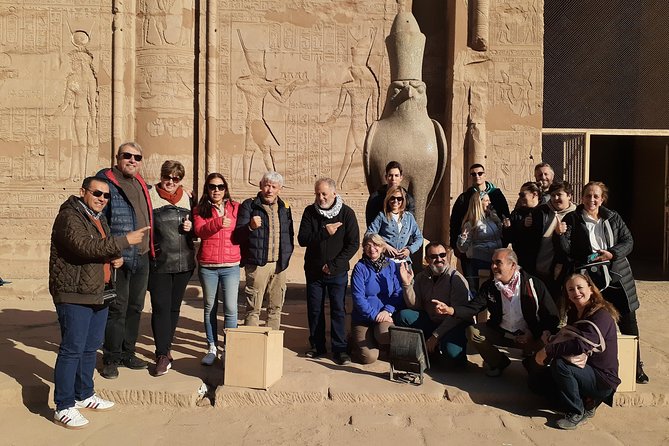
The day finishes at Kom Ombo, a temple built for two gods, Sobek and Haroeris. That shared dedication makes it one of the more unusual stops on the route. You are not looking at one single cult center, but at a religious complex shaped around two divine identities.
The visit is planned for about one hour, with admission included. Kom Ombo is also a reminder that ancient Egyptian temples were active religious institutions, not just royal monuments. The stop is short, so listen closely during the explanation and save your photos for the end if you want to make the most of the visit.
Day 3: Horus at Edfu and the great temples of Luxor
Edfu Temple receives about two hours, making it one of the more generous visits on the schedule. Dedicated to Horus, it is described as one of the best-preserved temples from ancient Egypt. Its condition makes the architecture easier to read, especially if you want to understand how temple entrances, halls, columns, and sacred spaces fit together.
This is the kind of stop where a guide adds real value. Without context, a large temple can become a blur of carved walls and giant doorways. With Moha’s explanations, you can follow the stories and understand why Horus mattered within the larger group of Egyptian gods.
The program then moves to Karnak Temple for about two hours. Karnak was built and expanded by different pharaohs over more than 2,000 years, so it is best understood as a vast religious center that grew over time. The famous avenue of sphinxes, the avenue of rams, and the hall of columns are the major features named for the visit.
Karnak can feel overwhelming because of its size. Two hours gives you enough time to see the central highlights, but not every corner. Stay near the guide during the main explanation, then use any remaining time for photographs and a closer look at the carvings.
Luxor Temple follows, with about two hours on site. It was dedicated to Amun Ra, a leading god associated with kingship. Compared with Karnak, Luxor Temple offers a more focused visit, but the two sites work well together. Karnak helps you understand the scale and long development of Egyptian temple building, while Luxor gives you another view of royal religion and ceremonial space.
Day 3 is the most demanding day of the cruise. Edfu, Karnak, and Luxor Temple make a strong group of visits, but you will need comfortable shoes, water, and enough energy for long periods on your feet. Drinks are not included, so plan to buy or carry what you need within the tour’s rules.
Same coast, a different boat:
- Hurghada: 3 Islands, Dolphins & Snorkel Yacht Trip w/ Lunch
★ 4.7 · 4,609 reviews - Ras Mohamed & White Island luxury Yacht Trip Sharm el Sheikh
★ 4.5 · 997 reviews - Snorkeling trip to Ras Mohamed & The White Island aboard Luxury Yacht
★ 5.0 · 479 reviews - Nile River Dinner Cruise on a Yacht with Open Buffet
★ 4.5 · 292 reviews
Day 4: Royal tombs and the monuments of western Luxor
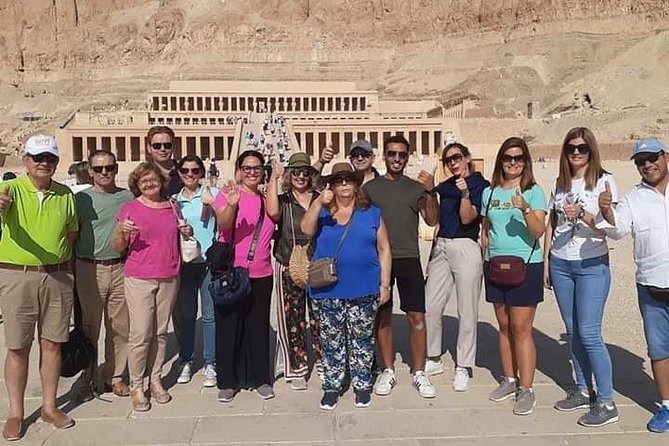
The final sightseeing day turns to the west bank of Luxor, beginning with the Valley of the Kings. This broad burial area contains tombs of many New Kingdom pharaohs, along with the tomb of Queen Hatshepsut among the sites listed for the area.
You can enter three tombs of your choice, and admission is included. That choice matters because you should not assume every tomb is the same. Ask the guide which three are open and best suited to your interests on the day of the visit. Some people care most about wall paintings, while others prefer a larger or more architecturally striking tomb.
The Valley of the Kings is one place where expectations help. The treasures associated with famous pharaohs are not generally what you see inside the tombs on a standard visit. The real attraction is the decorated underground setting and the chance to stand in the burial ground made for Egypt’s rulers.
Next comes the Mortuary Temple of Hatshepsut, with about one hour scheduled. Hatshepsut was one of Egypt’s most important queens, and her temple is often described as one of the great monuments of ancient Egypt. The broad terraces and carefully planned structure make it a strong contrast to the enclosed tombs.
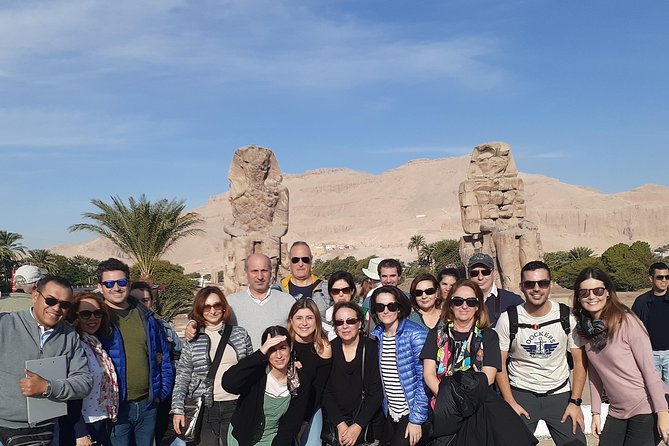
The Colossi of Memnon receive a brief 15-minute stop. These two huge stone statues represent Pharaoh Amenhotep III. This is a quick photo stop rather than a long guided visit, so keep your expectations in line with the schedule.
After checkout, you have free time in Luxor. The tour then takes you to the airport, train station, or hotel you specify. This final transfer is useful if you are continuing your Egyptian trip, but the timing should be checked carefully against any onward departure. The day includes several major sites before the free period, so do not schedule a tight connection without confirming the actual drop-off time.
What the $500 price really covers
At $500 per person, the package is strongest for travelers who want most major costs handled in one booking. Included are Aswan pickup, Luxor transfer, four nights on the cruise, the listed visits, admission tickets for those visits, four lunches, and four dinners.
That bundle can offer good value because entrance fees and transport add up quickly when arranged separately. It also reduces the need to negotiate a new taxi or guide at every stop. The educational side matters too. The cruise is not simply a room on the river, since the visits are organized around a guide who explains the monuments.
Still, $500 is not the final spending figure. Abu Simbel admission is extra, drinks are excluded, and tips are not included. You should also clarify exactly what room category and boat are being provided, since no boat name or cabin specifications are given in the supplied details.
The maximum group size is 30 people. That is not a small private group, so the experience may feel less personal during explanations. On the other hand, a shared group can keep the price below a private tour and gives the cruise a social feel.
Mohamed Gaber and the guiding style
The guide can make or break an Egypt trip, and Mohamed Gaber is the strongest recurring feature of this experience. His guiding style is described as warm, funny, and highly involved. He uses small theatrical demonstrations to make explanations easier to follow, and he has a strong command of Spanish.
That approach suits visitors who want to understand the complicated family trees and changing roles of Egyptian gods. The reviews also highlight his care with practical details, his ability to solve small problems quickly, and his effort to keep the group comfortable.
You should still ask which language your tour will operate in when booking. The supplied information identifies Spanish-language ability, but it does not state that every departure is conducted in Spanish or that another language is guaranteed.
Who should book this cruise?
I would recommend it to a first-time Egypt visitor who wants the major Aswan to Luxor monuments in one organized trip. Families may appreciate the included transfers, meals, and the guide’s playful explanations. The free first day also gives you a chance to rest before the busiest sightseeing begins.
It suits you if you value context, predictable transportation, and a mix of sightseeing and downtime on the river. It is less suited to someone who wants a private schedule, long unstructured visits, or a luxury cruise with detailed cabin information provided in advance.
Book at least three full days before the start time if you want the stated full-refund option. Changes or cancellations made later are not accepted for a refund under the given policy. Direct booking is offered through WhatsApp at +201001370325, and more information is available at conoceregipto.com.
Should you book the Aswan to Luxor cruise?
Book this cruise if you want a practical route through Egypt’s major southern temples, with meals, accommodation, admission tickets, and end-to-end transfers bundled together. The best reason to choose it is not the pool or the boat alone. It is the combination of a well-filled route and Mohamed Gaber’s lively, personal guiding.
Think twice if the optional Abu Simbel cost, group size of up to 30, or brisk sightseeing schedule would frustrate you. For most first visits, though, this is a strong-value way to connect Aswan and Luxor while leaving enough time on the Nile to catch your breath.
FAQ
Where does the Nile cruise start?
The cruise starts in Aswan, in Aswan Governorate, Egypt. Pickup is offered from an Aswan airport, train station, or hotel.
Where does the cruise end?
The experience ends in Luxor Governorate. After checkout and free time in Luxor, you can be taken to your chosen hotel, airport, or train station.
How long does the experience last?
The itinerary covers approximately four days, and accommodation is listed as four nights aboard the cruise.
What time does the tour start?
The stated start time is 6:00 am. Your exact pickup time and location should be confirmed when booking.
Is Abu Simbel included?
The Abu Simbel visit is optional. The admission ticket is not included, while the other listed site admissions are included.
Are meals included?
Four lunches and four dinners are included. Drinks are not included.
How many people can join the tour?
The maximum group size is 30 people.
Can I cancel for a full refund?
You can receive a full refund if you cancel at least three full days before the experience start time. Cancellations or changes made less than three full days in advance are not accepted for a refund.
Just added around Egypt
- 1 -Hour Sailing Egyptian felucca ride on the Nile in Cairo★ 4.5 · 41 reviews
- Dinner Nile Cruise belly dancer open buffer tanora show sailing on Nile★ 5.0 · 9 reviews
- Ain Sokhna Red Sea Day Use Yacht from Cairo★ 5.0 · 12 reviews
- Private sailing boat with its Sailor for one hour or more★ 5.0 · 25 reviews
- Cairo sailing boat Tours on the Nile by felucca★ 4.0 · 26 reviews
- All inclusive private sailing Egyptian Nile Felucca Ride at Cairo★ 5.0 · 21 reviews
- Sailing Nile cruise from Aswan to Luxor includes tours for 3 nights★ 5.0 · 16 reviews
- 4-Days Nile Cruise sails Aswan to Luxor &Abu Simbel. Air Balloon★ 5.0 · 26 reviews
Sailing Trips, compared.

Oslo Fjord Sightseeing Cruise by Sailing Ship
Read our review →
Sailing Catamaran Cruise with Sunset Option and DJ
Read our review →

Key West Sunset Sail with Open Bar, Live Music and Hors D’oeuvres
Read our review →
Los Cabos Luxury Sailing, Snorkel and Lunch Cruise
Read our review →

Daytime/Sunset/Night City Sailboat Tour with Drink
Read our review →Browse the lists this tour appears in